
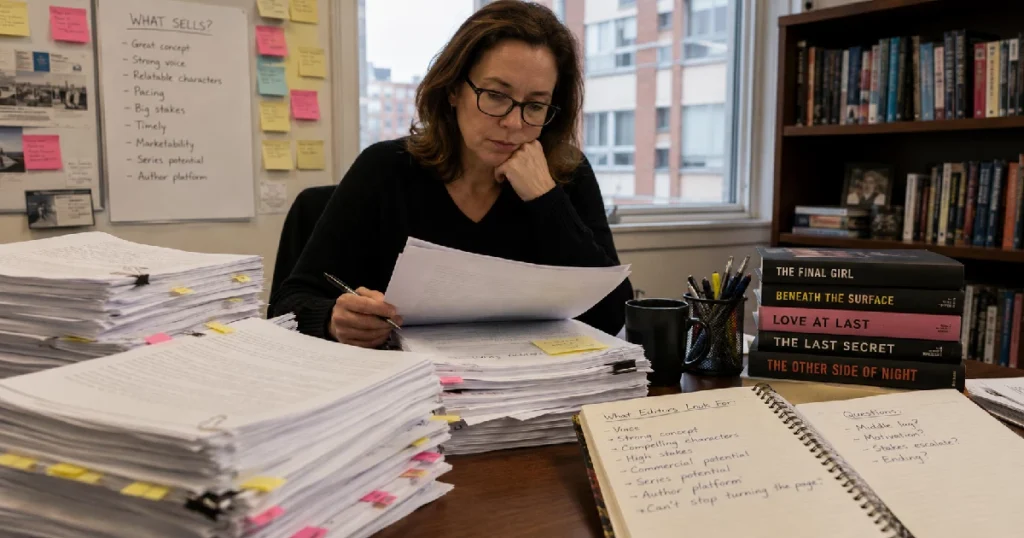
A common misconception among aspiring writers is that editors are in dire need of content and that anyone with a completed manuscript and a small sum of money can find a collaborator. The sheer volume of online advertisements from independent editors may be the source of that notion. However, a different picture emerges when you speak with someone who has actually developed a career editing books that were published through traditional publishing. The good ones are picky. Some people are extremely picky. What truly distinguishes a bestseller from the stack of manuscripts that never make it out of the slush is revealed by the reasons behind that selectivity.
Though not in the most obvious way, genre is typically where it begins. Because they are so familiar with the specifics of a genre, editors often gravitate toward books that they would otherwise read for pleasure. As a result, they are able to recognize when something is wrong without having to think about it. The pacing beats are familiar to a romance editor. A thriller editor is aware of the maximum amount of time you can keep a secret from readers before they become agitated. Most of the time, someone who says they can edit “anything” is a red flag disguised as flexibility because they haven’t mastered anything.
Then there’s potential, which seems nebulous until you see a skilled editor in action. If the editor has enough experience to see the final book’s shape beneath the mess, a rough manuscript with a compelling idea can still be accepted. However, that is less common than it once was. Manuscripts that arrive on an editor’s desk now frequently need to be nearly camera-ready before anyone takes a serious look because publishing houses can’t afford to gamble the way they used to. Most novice writers are unaware that there is a smaller margin for error.
How experienced a writer sounds in that initial email is more difficult to measure, but it seems to be equally crucial. Editors can tell almost immediately if a writer is working on a third or fourth draft, has attended a workshop, read similar books, and taken actual notes, or is certain that their first draft is already revolutionary. Everything downstream is shaped by that distinction. It’s the difference between a writer who has fulfilled their obligations and one who is going to ask for a lot of help with an unfinished manuscript.
Additionally, personality is more important than most writers would like to acknowledge. No matter how promising the pages appear, nobody wants to work closely with someone challenging for a full year. When an editor provides critical, thoughtful feedback and receives a nasty response, they often remember that. Since publishing is a small business, reputations spread more quickly than most writers anticipate. It’s not a nice bonus to be easy to work with. It’s more akin to a requirement.
Beneath all of that is gut instinct, which is less structured. Editors will tell you, almost sheepishly, that the entire endeavor is subjective and that in order to do a project justice, they must genuinely believe in it, just as any long-term, intensive working relationship necessitates some initial investment. It’s difficult to ignore how much this is more like matchmaking than manufacturing. The books that become popular are frequently chosen more by someone falling in love with them than by a formula.
This brings up the more difficult question that marketers and editors alike are constantly debating: what, once a book is accepted, actually makes it sell? An author’s own experience is instructive in this regard: an earlier, less successful self-published book sold ten times as many copies in its first month as a heavily illustrated, meticulously crafted memoir, which only sold 750 copies. A little humble and confusing. The subsequent book, which was centered around a single, compelling concept and relentlessly promoted, sold over 50,000 copies in its first year and appeared on three major lists, but it failed to make it onto the one list that truly matters to everyone.
Many writers end up chasing the wrong thing because of the difference between “bestseller” as a sales accomplishment and “bestseller” as a branded title. Over the course of their lives, average books sell between 250 and 2,000 copies, which redefines what truly qualifies as success. Potential editors aren’t always looking for the next big hit. They are looking for a manuscript that respects the reader, a clear idea, and a writer who is serious enough to have completed the unglamorous work before sending.
