
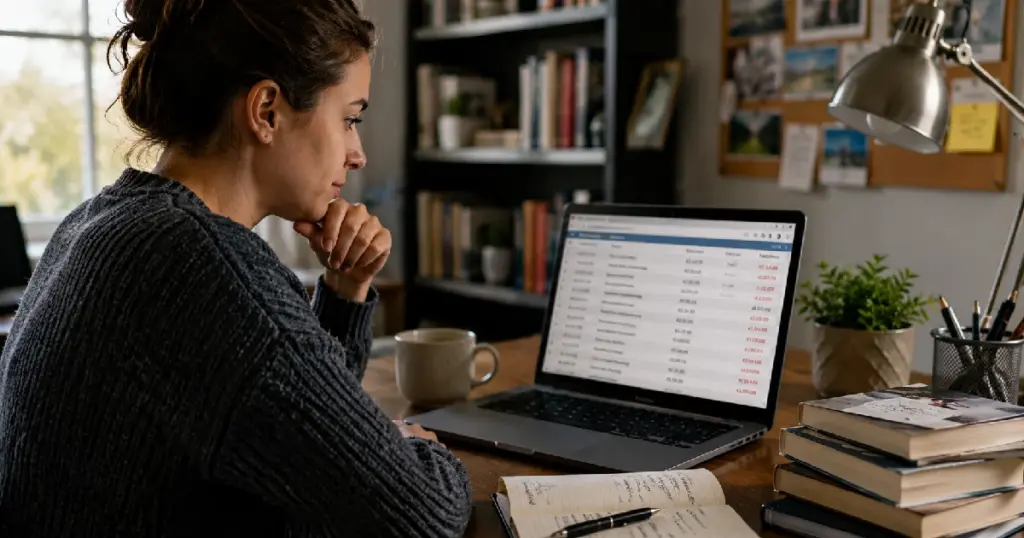
Five-star reviews and book tours don’t matter to a bank statement. All it displays are dates, numbers, and the sporadic overdraft alert. And when you actually sit down and look at what a “successful” author’s account looks like, month over month, the picture is messier — and more interesting — than the author photo on the back cover would suggest.
Perhaps the majority of readers envision a consistent income. A big, satisfying deposit landing every few weeks, like a salary. That’s not really how it works. Royalty payments from platforms like Amazon Kindle Direct Publishing tend to trickle in thirty to sixty days after the sales month ends, so an author writing in June might not see that money until August, sometimes later. The entire system has a lag that necessitates a level of patience that is not necessary for most jobs.
Then there are the lump-sum transfers, which initially appear impressive. Sales from dozens of stores and libraries worldwide are combined by aggregators like Draft2Digital and IngramSpark, and the deposit appears as a single, neat figure. That could easily be mistaken for a windfall. Usually, it isn’t. Spread across a quarter, or divided by the hours spent writing the book in the first place, the hourly rate can be humbling.
Traditional publishing complicates the picture further. An advance sounds like free money — and in a sense it is, since a debut author doesn’t have to pay it back if the book underperforms. However, observe what transpires on the statement. First, a fifteen percent commission is paid to the agent. The remaining amount is then divided into two or three installments that are spread out over the course of the agreement, sometimes over a period of two years. Before taxes, a $10,000 advance can be discreetly reduced to a few hundred dollars per month. That’s more of an observation about how slowly money moves in this industry than a critique of publishing.
Outside the numbers, there’s a rhythm to it that feels almost seasonal. Before a launch, marketing expenses—such as BookBub features, Amazon ad campaigns, and the occasional Meta boost—concentrate and then disappear for several months. Small and unnoticeable until you add them up at the end of the year, software subscriptions hum in the background. Paying editors and cover designers in spurts, typically just prior to a release, results in an odd cash-flow pattern where expenses frequently arrive well ahead of the revenue they are supposed to produce.
Debbie Young, a British novelist, has written openly about avoiding her own bank statements for years, characterizing herself as an ostrich who feels more at ease creating fictional characters than balancing receipts. It’s a well-known tale among authors. A lot of people handle bookkeeping as an afterthought, putting it in a shoebox and handling it once a year, just before taxes are due. It’s difficult to ignore the fact that the most disciplined writers—those who regularly appear on the page—are frequently the least disciplined when it comes to their ledgers.
That is gradually changing. Tracking mileage, taking pictures of receipts, and seeing profit and loss updates in nearly real time have all been made simpler by accounting apps. Whether that shift actually improves financial outcomes or just makes the anxiety more visible is still unclear. It could be therapeutic in and of itself to see the number.
The median full-time author makes about $20,000 a year from writing alone, according to surveys from the Authors Guild. This explains why so many “successful” authors are discreetly balancing freelance editing, teaching gigs, or unrelated day jobs. Success, on paper, rarely means comfort. It usually means the deposits are consistent enough, and varied enough — audiobooks here, foreign rights there — to keep the whole operation afloat.
Watching this unfold across dozens of author interviews and financial breakdowns, one pattern keeps surfacing. The most gifted storytellers are not always the ones who endure. They’re the ones who treat the bank statement itself as a kind of manuscript, worth reading closely, revising often, and never mistaking for the whole story.
