
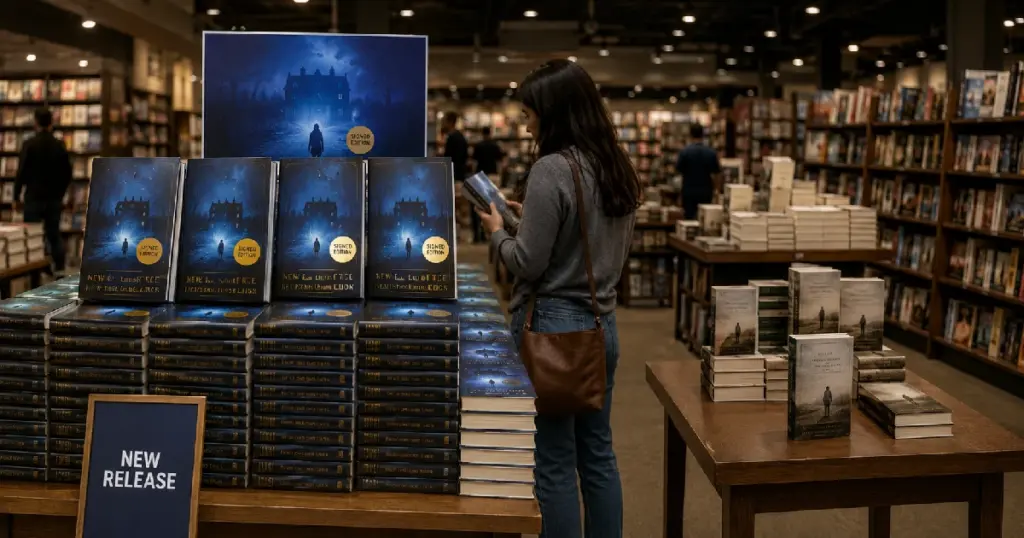
Walk into any Barnes & Noble on a Tuesday — new release day — and you’ll notice something before you even reach the shelves. Certain books are everywhere. They’re stacked three feet high on the front tables, face-out on end caps, sometimes with a cardboard display that took someone considerable effort to assemble. Those books didn’t earn that placement by being good. They paid for it. And behind that payment is a calculation publishers make that has very little to do with the quality of the writing inside.
The publishing industry runs on a kind of layered bet. A book is purchased by a major house, typically for an advance based on the number of copies they anticipate selling. The greater the number, the greater the incentive and pressure to ensure the wager is profitable. Simply put, Stephen King has spent decades demonstrating his ability to sell, so he receives a marketing budget large enough to support a small movie. His readers are known to publishers. They are aware of the podcasts those readers listen to, where they shop, and how soon they will place a preorder. That level of assurance is not provided by an unknown writer working on their third literary work in a subdued genre, so the money goes elsewhere.
The majority of readers might never consider this. They believe that a book on the front table was chosen by an editorial committee that assessed its literary value. Seldom does it operate like that. Slotting fees, which are essentially payments publishers make to booksellers for premium shelf placement, are just as prevalent in grocery stores as they are in bookstores. Certain novels are at your eye level in the same way that cereal is at a child’s. According to reports, some bookstores at airports sell an even greater portion of their shelf space outright. The visibility seems natural. Almost never is.
The snowball effect that occurs once a book reaches the bestseller list is what makes the system so fascinating to observe. Getting onto the New York Times list isn’t just a badge — it creates its own sales momentum. More copies are ordered by retailers. The “bestseller” sticker catches the attention of casual browsers. The author gains more attention from media bookers. Because publishers are aware of this, it is not unreasonable to spend heavily during the initial weeks of a launch. It’s engineering. A well-funded early campaign can put a book on a list where it can be sold for months without further expenditure. That’s a return on investment that’s genuinely hard to argue with.
Genre plays its role too, in ways that feel almost sociological. The online readership of the current wave of romantasy, which combines romance and high fantasy, is highly engaged, structured like a political campaign, and eager to promote books they adore. Publishers have taken notice. When a genre has that kind of built-in fan infrastructure, a marketing budget becomes a match thrown near dry kindling rather than a bonfire that has to be built from scratch. The money doesn’t have to create enthusiasm. It just has to point the existing enthusiasm in a direction.
Influencer marketing has reshaped the math considerably. In publishing circles, there is a somewhat unsettling reality: books don’t usually go viral because authors are endearing on social media. Influencers, such as BookTokers with hundreds of thousands of followers and Bookstagrammers with devoted communities, choose to discuss them, which is how they become viral. That attention is paid for by well-funded publishers. In an effort to produce content that appears spontaneous but was purposefully seeded, they send advance copies to the appropriate voices, sometimes along with ornate gifts. It’s not exactly deceptive, but it’s worth knowing it happens.
Authors who self-publish sometimes discover all of this the hard way. They put a book on Amazon with the expectation that the site will take care of the rest, only to be buried beneath hundreds of thousands of new titles and become invisible in a matter of days. The ensuing realization is frequently startling: marketing a book and publishing a book are completely different endeavors that call for completely different expertise and, frequently, completely different budgets. One thing the book marketing reference material makes clear, and it’s important to state clearly, is that no amount of money can fix a book that readers don’t genuinely want. The spending amplifies demand; it doesn’t manufacture it. Authors who mistake a marketing budget for a substitute for a resonant story tend to find out quickly how expensive that confusion can get.
It’s difficult to ignore the tension that permeates the entire system. The books with the largest budgets are frequently the ones that don’t need them the most—established writers with devoted readers who would have discovered the next release anyhow. Meanwhile, genuinely surprising voices sometimes land in the mid-list and disappear not because readers rejected them but because they were never given the exposure to be rejected or embraced at all. Whether that’s a failure of the industry or simply how commerce works is still unclear. Depending on the day you ask, it’s probably both.
